The numbers are finally out, and they tell a story of ambition, catastrophe, and a stubborn comeback. Polish developer CD Projekt Red has disclosed the full budgetary picture behind Cyberpunk 2077 and its subsequent Phantom Liberty expansion, and the figures are staggering. The DLC alone cost $80 million when development and marketing are combined, while millions more were poured into post-launch patches, hotfixes, and systemic overhauls that dragged the game back from the brink. After years of playing the long game, the studio’s patience is only now beginning to yield tangible rewards—but the scars left by the 2020 launch remain a cautionary tale for the entire industry.
The base game itself came with a $174 million production price tag, topped by an additional $142 million in global marketing spend. That $316 million total made Cyberpunk 2077 one of the most expensive video games ever created. It was engineered to be too big to fail, yet it crashed with a spectacle rarely witnessed in modern entertainment. The launch set a new benchmark for corporate overreach in a sector already infamous for crunch, broken promises, and unsustainable hype cycles. Against all odds, however, the title has engineered a redemption arc that few thought possible.
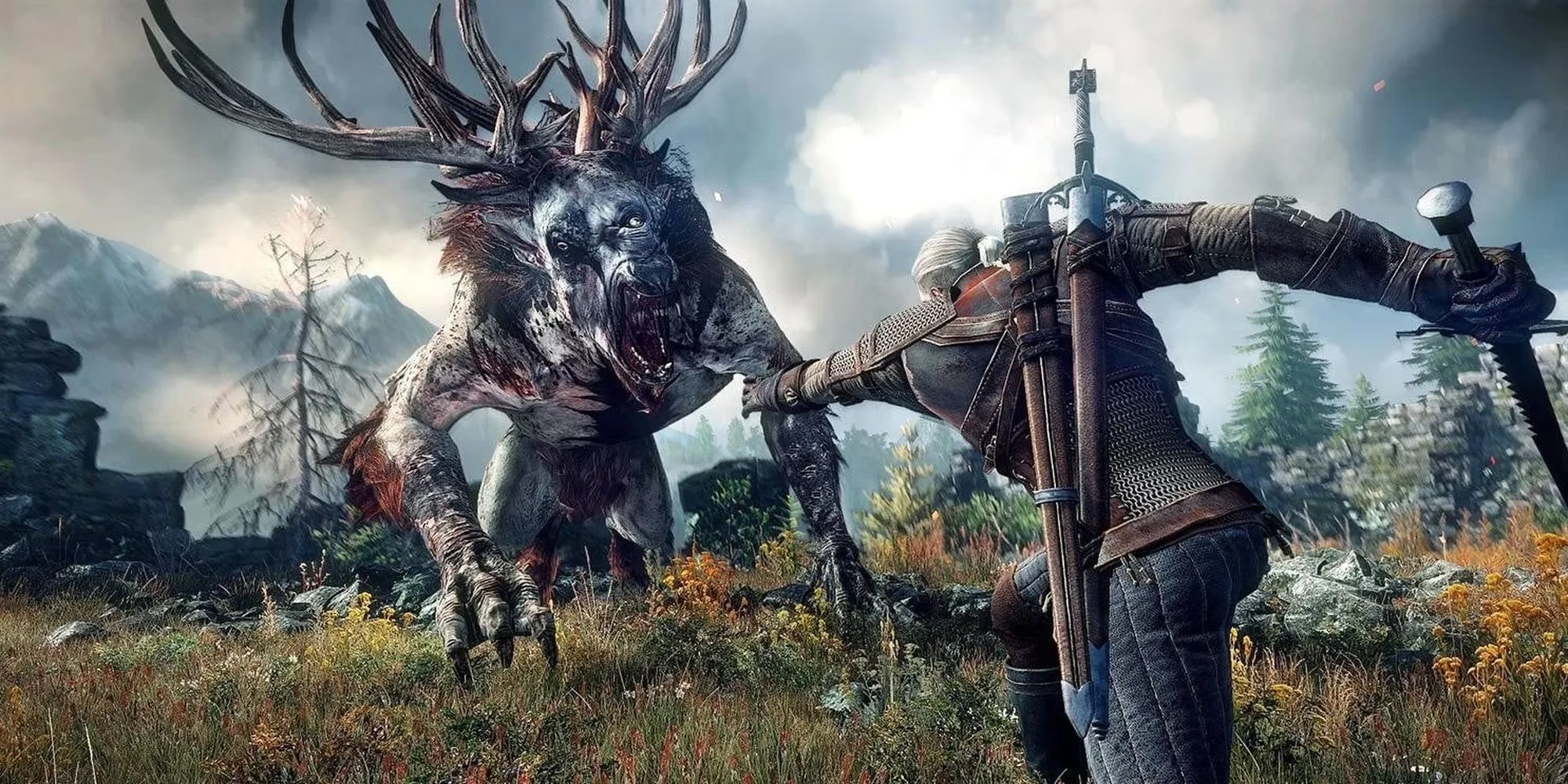
Before the fall, CD Projekt Red was untouchable. The Witcher 3: Wild Hunt, with its sprawling open world, morally grey storytelling, and a pair of massive paid expansions that rivaled full-length games, had turned the studio into a golden child. In a mainstream landscape marred by greedy publishers, loot boxes, and always-online requirements, CDPR positioned itself as the anti-establishment hero. Free DLC, generous post-launch support, and expansions like Blood and Wine that were priced like budget titles while offering premium content built an immense reservoir of trust. Players bought into the mythos of a developer that stuck it to the man while simultaneously becoming the man. That goodwill, cultivated over years, was squandered in an instant.
Behind the scenes, millions were being funneled into trailers and promotional stunts that depicted Cyberpunk 2077 as the definitive next-gen experience—a seamless open world teeming with life, choice, and consequence. Meanwhile, developers on the ground were struggling to assemble a product that merely worked, let alone one that honored the vision being paraded on stage. The disparity between marketing fiction and engineering reality made disaster inevitable. The rank-and-file teams, not the decision-makers, bore the brunt of the backlash and, importantly, were later empowered to rebuild.
CD Projekt Red had no choice but to salvage Cyberpunk 2077. A second failure would have meant the end of the studio as fans knew it. The choice to redeem rather than abandon spoke to a corporate survival instinct: without repairing the damage, the company would never regain enough trust to launch future projects, including the next Witcher saga. Thus began a multi-year marathon of patches, hotfixes, rebalancing, and apologies. The 2.0 Update, which arrived alongside Phantom Liberty, marked the symbolic turning point. It overhauled core systems like cyberware, police AI, and vehicle combat, effectively relaunching the game as a far more coherent and stable product.
Yet the question lingers: has enough been done to make up for abandoning the millions who pre-ordered, trusted, and defended CDPR without reason to doubt them? Many players remain hesitant, unable to forget the mountain of lies that defined Cyberpunk 2077 for years. The comeback, however, was always going to materialize—whether or not the jaded user base bought in was practically irrelevant. Phantom Liberty’s release demonstrated a split player base: some became enamored with the gritty, spy-thriller confines of Dogtown and its nuanced storytelling, while others stayed away, scarred by the initial betrayal.
Key Financial Breakdown
Base game development: $174 million
Global marketing: $142 million
Phantom Liberty development & marketing: $80 million
Post-launch updates: millions in additional investment
These numbers underscore a brutal reality. CDPR is no longer just burning goodwill to generate profit; it is paying off a debt to its shareholders as much as to its fans. Phantom Liberty is the moment Cyberpunk 2077 finally broke even, allowing the company to move on. The expansion’s success on critical and commercial fronts suggests that the studio has, at minimum, stabilized its reputation. At the same time, treating CD Projekt Red as a beloved indie darling again would be naive. The gaming public has learned that even the most revered studios can fall prey to unrealistic deadlines, executive pressure, and a poisonous gap between marketing hype and development truth.
The lessons are now etched into industry lore. No amount of money can buy back trust that has been lit on fire. Restoration requires years of consistent, transparent labor. CDPR’s saga proves that a comeback is possible, but it leaves behind a permanent asterisk. The studio that once defined how AAA games should be supported is now the example of how a launch should never go. As the company pivots to new entries in The Witcher and Cyberpunk franchises, all eyes will scrutinize not just the trailers but the actual state of the code behind them.
Phantom Liberty may have closed the chapter on Cyberpunk 2077’s troubled cycle, but the epilogue is still being written. For players, the best way to experience Night City now is to rebel against the manufactured hype and judge the game for what it has become, not for what it promised to be.
Data referenced from NPD Group helps frame why Cyberpunk 2077’s ballooning production, marketing, and post-launch recovery costs only make sense if the title can sustain long-tail sales and expansion attach rates over multiple years. In an industry where premium releases increasingly rely on extended monetization windows, the financial story behind Phantom Liberty reads less like a simple DLC bet and more like a calculated effort to stabilize revenue, rebuild consumer confidence, and keep the franchise commercially viable for future installments.