It is 2026, and few stories in the gaming industry remain as remarkable as the turnaround of Cyberpunk 2077. Once ridiculed as one of the most disastrous launches in modern memory, CD Projekt Red’s futuristic RPG has transformed into a benchmark for post-launch support—a feat that stands in stark contrast to the abandoned ambitions of BioWare’s Anthem. The journey from broken promise to beloved title has not only rewritten Cyberpunk’s legacy but also served as a sobering reminder of how many promising games never get a second chance.
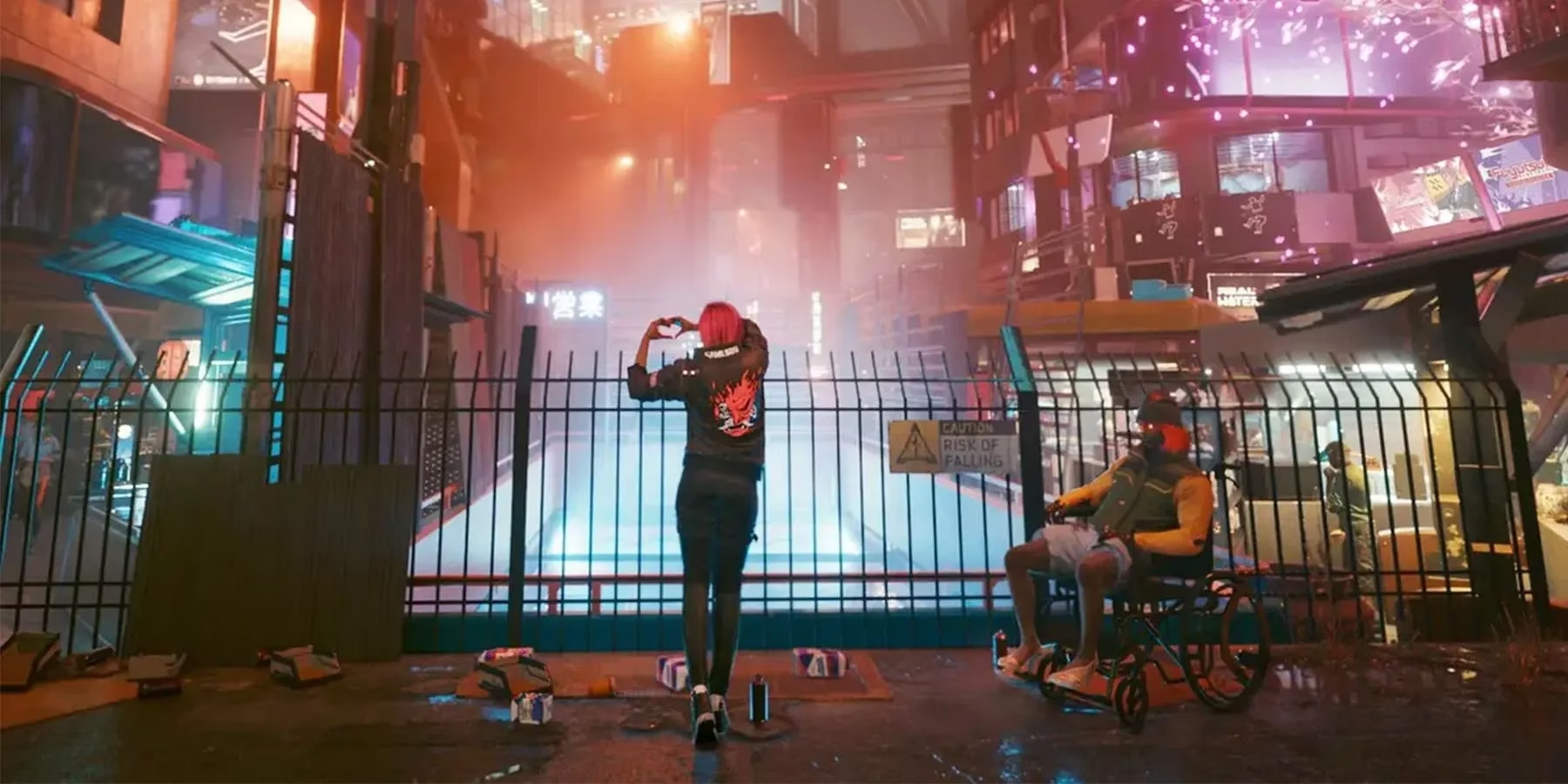
When Cyberpunk 2077 arrived in December 2020, expectations were sky-high. Instead of delivering a genre-defining experience, the game stumbled out of the gate with a laundry list of technical horrors—game-breaking bugs, performance collapses on last-gen consoles, and a hollow open world that fell far short of marketing promises. Many players demanded refunds, and the title was even pulled from the PlayStation Store. At that moment, it seemed destined to remain a cautionary tale of overhype and underdelivery. Yet CD Projekt Red refused to walk away.
The studio spent three grueling years overhauling nearly every system. Patch after patch improved stability, AI behavior, and RPG mechanics, but the true transformation came with the 2.0 update released in September 2023. That free overhaul rebuilt fundamental pillars such as the skill tree, police response, vehicle combat, and cyberware progression. Almost overnight, the core gameplay became fluid, tactical, and deeply satisfying. Less than a week later, the Phantom Liberty expansion arrived—a spy-thriller storyline that added a dense new district, Idris Elba as a charismatic lead, and an alternate ending that redefined the emotional stakes. Together, the update and expansion pushed Cyberpunk 2077 to heights that were previously unimaginable. Steam reviews surged to “Overwhelmingly Positive,” and concurrent player counts rivaled launch numbers. By 2026, the game continues to thrive through modding communities, next-gen enhancements, and a devoted player base that eagerly speculates about a sequel.
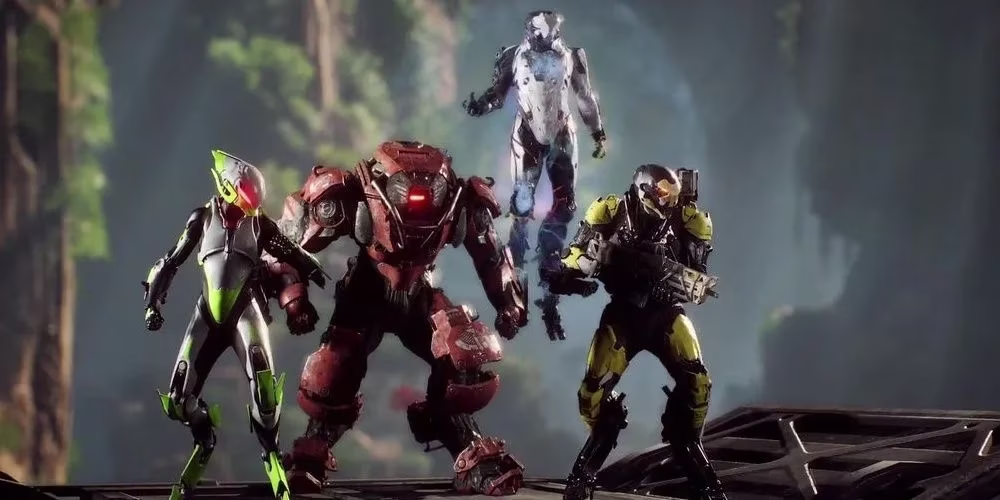
Cyberpunk’s redemption arc inevitably draws comparisons to Anthem, the ill-fated cooperative shooter from BioWare. Released in February 2019, Anthem arrived with jaw-dropping flight mechanics and gorgeous visuals but suffered from a barren endgame, repetitive missions, loot systems that undermined player agency, and a narrative that felt more like a prologue than a complete story. The foundation was undeniably compelling—the Iron Man-like freedom of flight and the rhythmic chaining of combo abilities showed flashes of brilliance. Yet the package was hollow, and players abandoned the servers in droves.
What followed was even more heartbreaking. BioWare acknowledged the game’s shortcomings and announced Anthem NEXT, a comprehensive reboot designed to rework core loops, progression, and world design. For two years, a dedicated team labored on this revival, teasing glimpses of a more dynamic open world and meaningful loot overhauls. In February 2021, however, Electronic Arts pulled the plug, canceling all further development and dashing any hope of a Cyberpunk-style comeback. The shelved project left behind only scattered concept art and a lingering “what if” that haunts the looter-shooter community to this day.
The divergence between these two stories is not merely about talent or budget—it is about commitment. Cyberpunk 2077 was given time to heal because CD Projekt Red treated it as a long-term investment in its IP, not just a product to cycle out. Anthem, despite equally apparent flaws, was never afforded the same patience. Its 2.0 vision remained a ghost, while Cyberpunk’s 2.0 became a milestone.
Looking back in 2026, the gaming landscape has absorbed both lessons. Studios now routinely adopt “live revive” strategies for underwhelming launches, and players have grown more vocal about demanding complete experiences at launch. Yet the Anthem-shaped hole remains—a reminder that even a strong core concept can wither without sustained nurturing. Some fans still hold onto the faint hope that the IP might someday be resurrected by a different team or in a different form, but in an industry that moves at breakneck speed, the window for such a miracle is vanishingly small.
Cyberpunk 2077’s resurrection proves that patience and post-launch support can salvage even the most tarnished reputations. For every game that pulls off a No Man’s Sky or Final Fantasy XIV-level turnaround, there is an Anthem that gets left behind, a victim of shifting corporate priorities. As 2026 unfolds, the conversation around broken releases increasingly emphasizes that second chances are precious—and never guaranteed.