The once-troubled Cyberpunk 2077 has long since shed its bug-ridden past, especially after the transformative 2.0 update that reworked everything from combat to skill trees. By the time Phantom Liberty arrived, Night City was practically glowing with renewed potential, and the expansion wasted no time reminding players why this universe feels so alive—and so perilous. From the opening moments, it’s a spy thriller that knows exactly how to play with expectations. One minute V is pulling the President of the New United States from a burning wreck, trading fire with heavily armed adversaries and facing down a towering Chimera mech like it’s just another Tuesday. It’s loud, cinematic, and utterly gripping. Then, just as things start to settle into a familiar rhythm, the game does something wonderfully unsettling. It gets quiet. Too quiet.
Players who have spent dozens of hours in Cyberpunk 2077 know that lull all too well: the quieter moments between gigs where you reload, re-spec, and breathe. Phantom Liberty deliberately leans into that comfort zone after the initial rescue of President Myers, letting players think they’ve found their footing. The mission seems straightforward—keep a high-profile asset safe, work with an FIA contact, and maybe unravel the mystery surrounding the enigmatic netrunner Songbird. Even Johnny Silverhand, that ever-present digital ghost, mutters something about bad vibes, but it’s easy to brush off as typical Silverhand cynicism. After all, you’ve already survived a robot spider-tank and a plane crash. What could possibly go wrong?
Then Solomon Reed arrives.
It’s not a cutscene. It's not a phone call. Reed doesn’t politely knock. One second V is standing in the shadows, the next a firm hand clamps around their collar while a pistol presses into the gut. The man himself, played with terrifying stillness by Idris Elba, appears from nowhere and starts asking questions. Hard questions. Interrogation-mode questions. And the player has to answer, every dialogue choice hanging in the air while the barrel digs just a little deeper. Talk about a rude awakening. The game’s pacing deliberately dials back to something uncomfortably intimate, and that shift is nothing short of genius.
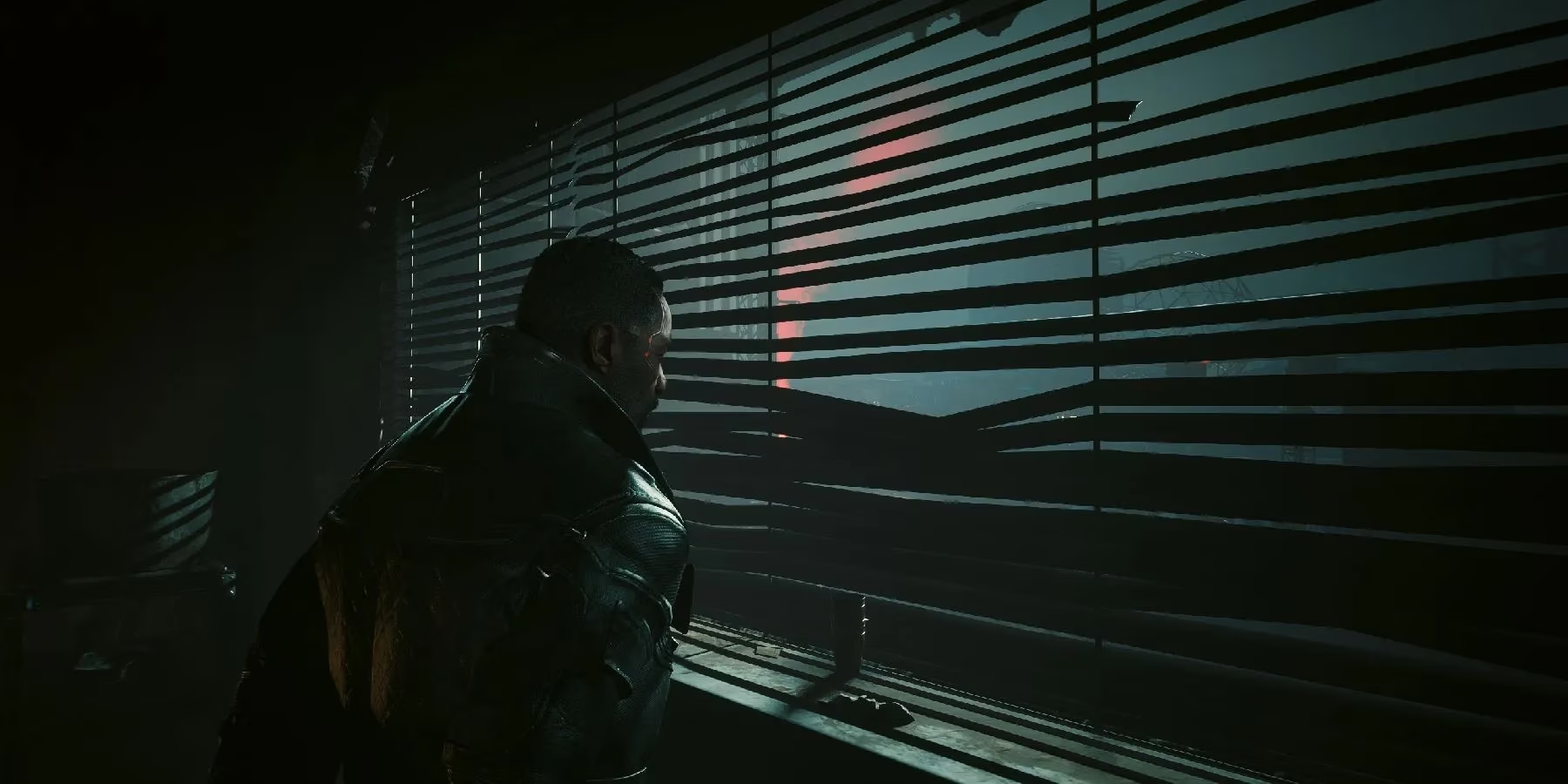
Reed’s entrance isn’t just a jump scare—it’s a narrative masterstroke that subverts every expectation the first hour builds. Up until that moment, Phantom Liberty could have been mistaken for a straightforward action-packed add-on centered on rescuing a politician. But Reed’s sudden, invasive interrogation makes something abundantly clear: nothing here is simple. The president’s safety is not the core story. Songbird’s fate, her secrets, and the tangled web of betrayal and duty between Reed and the FIA are the true heart of the expansion. By having the game literally grab the player and shake them out of their complacency, CD Projekt Red signals that this DLC demands full attention. It’s the kind of moment that makes you lean forward and think, Okay, this just got real.
The brilliance of that scene extends far beyond shock value. It reframes the player’s relationship with every character. Myers, who seemed like a grateful damsel in distress, suddenly feels like a chess master moving pieces from the shadows. Songbird’s desperation takes on new layers. And Reed, the loyal agent with a voice as smooth as aged whiskey, becomes an unpredictable force—not quite ally, not quite threat. This uneasy dynamic colors every subsequent mission, every conversation, and every choice. It’s a reminder that in Cyberpunk 2077, trust is a luxury no one can afford.
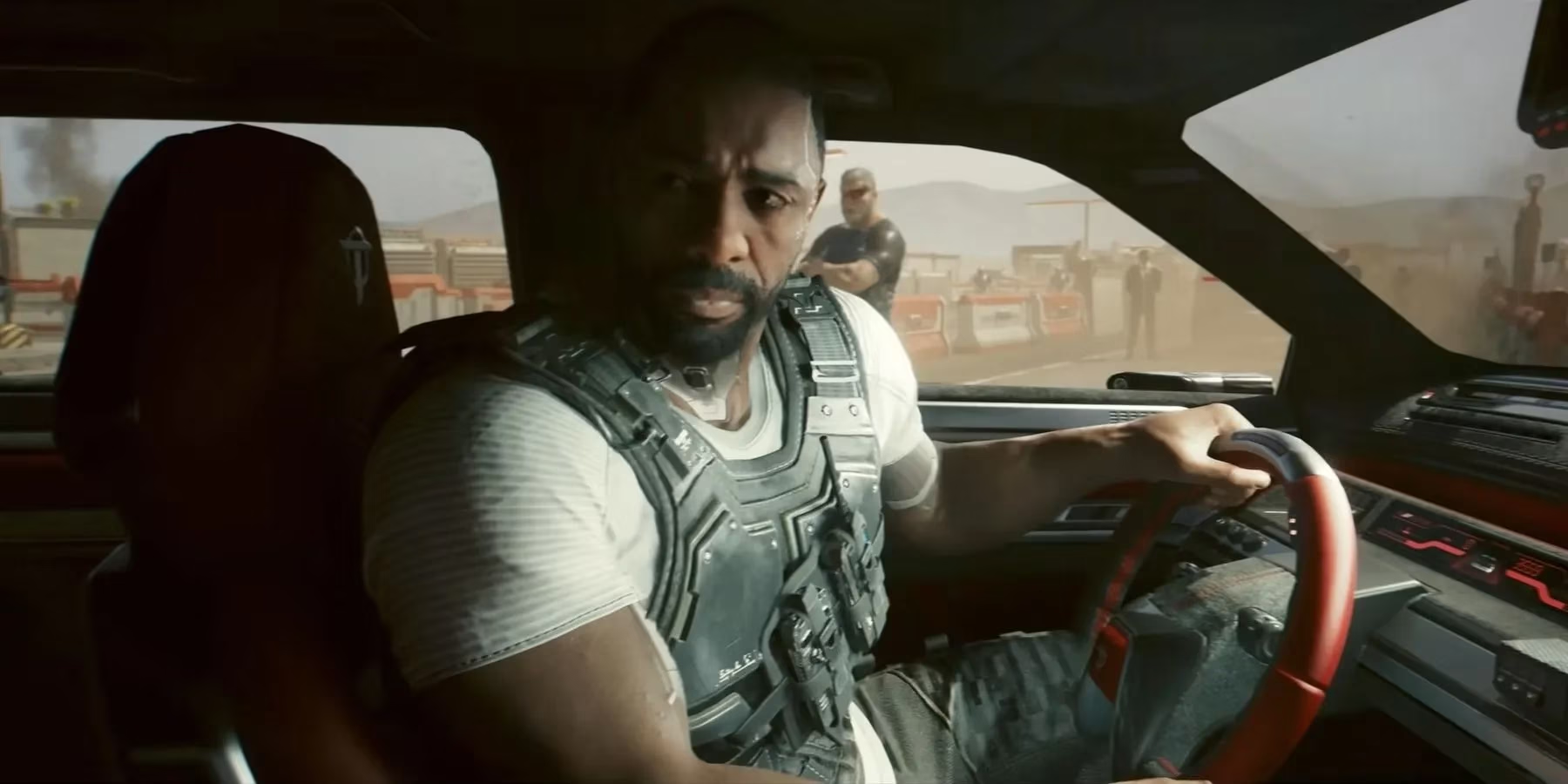
That sense of instability is exactly what makes Phantom Liberty linger in the mind long after the credits roll. The entire expansion operates on layers of loyalty and deception, and Reed embodies that duality perfectly. He is both protector and interrogator, a man who believes in his cause but whose methods send chills down the spine. The way his introduction shatters the illusion of security also mirrors the larger themes CD Projekt Red wove into the DLC: no fix is ever final, and every safe house has cracks in its walls. It’s a story that rewards players who pay attention to the small details—the flicker in a character’s eye, the hesitation in their voice, the way Johnny paces nervously in the corner of V’s consciousness.
Outside the narrative, Phantom Liberty’s rebalanced gameplay systems sing in harmony with this tension. The revamped cyberware and perk trees from update 2.0 let players tailor V into a razor-sharp solo, a stealthy phantom, or a quick-hacking ghost, but the expansion’s design ensures that no amount of chrome can protect against the raw, human unpredictability of people like Reed. Dogtown itself, a crumbling district of desperation and opulence, mirrors the internal conflict: it shines with neon ambition but festers with corruption beneath the surface.
By the time 2026 rolls around, Cyberpunk 2077 stands as a testament to what persistent development and thoughtful storytelling can achieve. Phantom Liberty, and Solomon Reed’s unforgettable debut in particular, remains a highlight not just for the game, but for modern RPGs in general. It’s a lesson in pacing, character introduction, and tone—one that many games could learn from. And for players stepping into Night City for the first time or returning for another run, that sudden interrogation in the dark still delivers the same electric jolt. It’s not just a test of V’s mettle; it’s the moment the expansion stops being a game and starts feeling like a living, breathing thriller. And honestly, isn’t that the whole point?