I never got to see Idris Elba play James Bond. As a fan, I spent years imagining what that might look like, but by 2026 I’m convinced the moment has passed. The actor is older now, and the Bond producers have repeatedly said they want a fresh start after Daniel Craig. Yet while the dream of an Elba 007 is gone, his performance in Cyberpunk 2077: Phantom Liberty offers an extraordinary consolation prize.
When I first met Solomon Reed, Elba’s undercover agent in Night City, I wasn’t sure what to make of him. I had grown used to Keanu Reeves’ Johnny Silverhand — loud, theatrical, every line delivered like a grenade. Reed is the opposite. He feels slower, worn down, quietly dangerous. It would have been easy for Elba to deliver another Luther, a beaten-down man full of righteous anger. That would have suited the material. But Elba does something different: he makes Reed feel like a man who has given everything to duty and received almost nothing back.
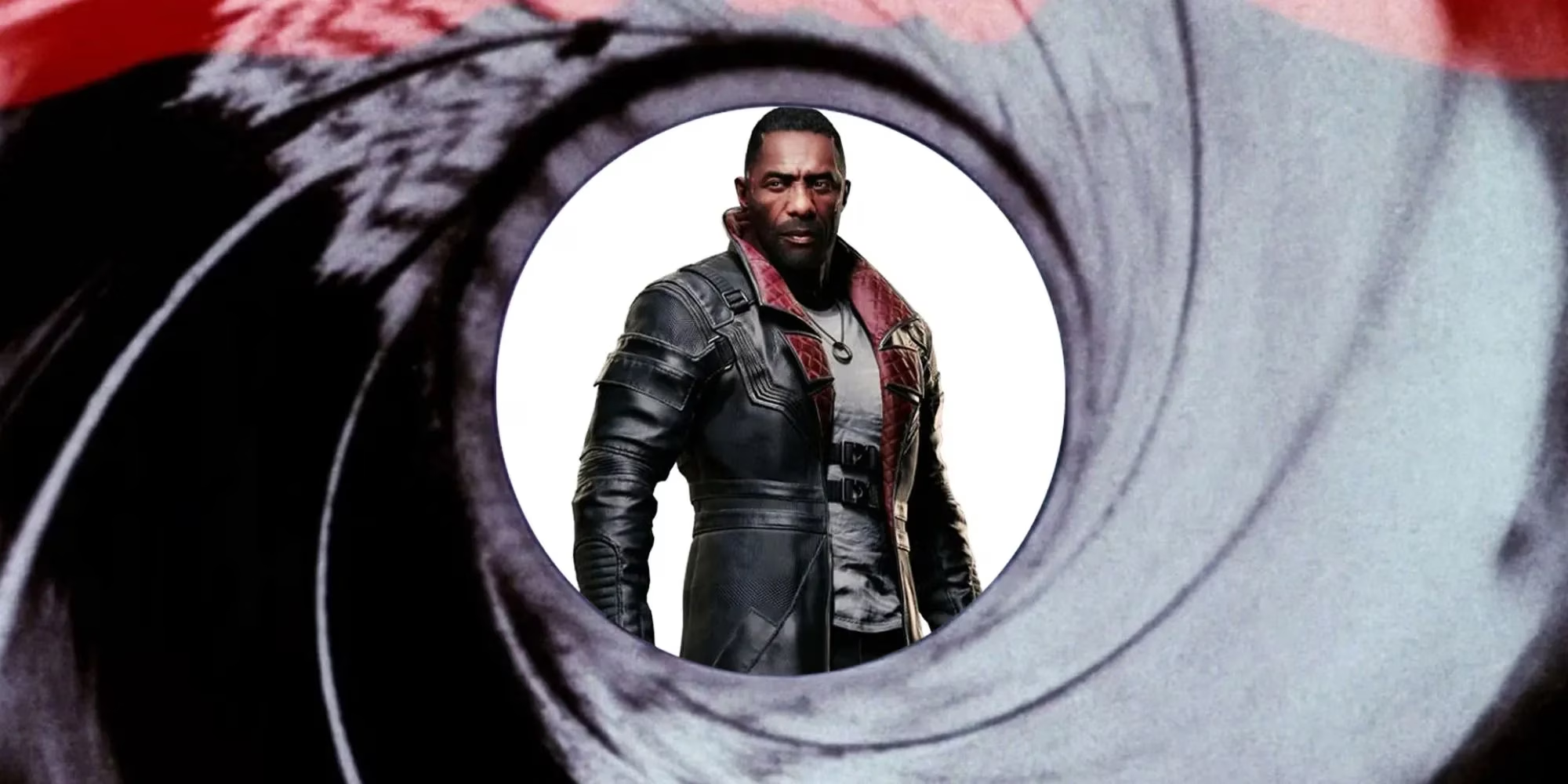
Reed’s arc in Phantom Liberty is soaked in betrayal. An undercover agent left to rot by the country he served, he returns not out of idealism but out of cold, unyielding obligation. He is not chasing justice or loyalty in any soft, squishy sense. He is chasing duty, and that makes him feel dangerous long before he ever raises a weapon.
That description might sound familiar if you’ve followed the Bond franchise. Strip away the cyberpunk slang — the “chooms,” the “gonks,” the cybernetic implants — and replace them with covert war stories or missions in Budapest, and Reed could easily pass for a version of James Bond. He is an agent operating alone, called in when extreme solutions are required, but never fully trusted by his handlers. That is precisely the sort of Bond I think Elba would have given us.
Looking back, the timing was simply cruel. Elba was at his peak as a potential Bond just as Craig’s era was shifting. Craig’s Bond began as a smooth, wealthy scoundrel in the Brosnan mold, but as the films continued, both modern audience tastes and Craig’s own growing weariness with the role pushed 007 into something more grounded, more brutal. By the end, Bond wasn’t a charming lone wolf; he was a feral dog fighting for his life.
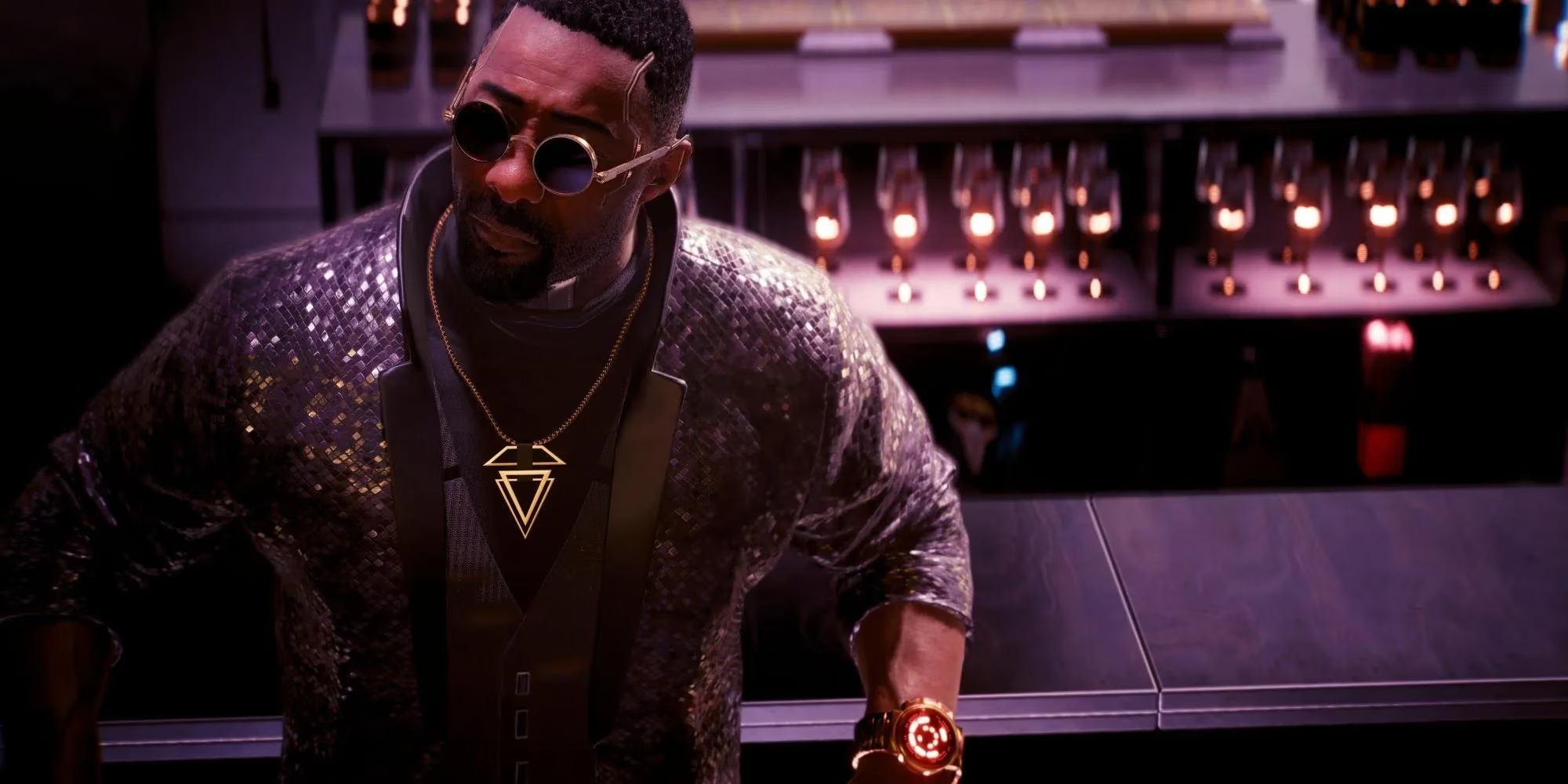
Elba’s Bond would have been different. His gravelly voice and permanent stubble suggest a tougher, grittier agent than Craig’s smooth talk or Brosnan’s pretty-boy charm. I think he would have been impenetrable, always two steps ahead, but also happy to break through a door or a nose to get that third step. That physicality, that bulk and punch, would have been perfect after Brosnan. But by the time Craig finally stepped away, it would have felt too similar.
When No Time To Die ended Craig’s tenure, it didn’t just close a chapter on one actor. It closed a chapter on an entire style. In the late 2000s, gritty realism was what audiences wanted. But by the early 2020s, and certainly by 2026, the franchise seemed ready for something else. Names like Aaron Taylor-Johnson, Harris Dickinson, Richard Madden, and Daniel Kaluuya emerged as better fits for whatever comes next. Even Damson Idris, who is no relation to Elba despite confusion in some British tabloids, feels like a more natural bridge to a younger, quicker Bond.
When I survey the field in 2026, a few candidates stand out for very different reasons:
-
Aaron Taylor-Johnson — action-first, younger energy, a natural fit for John Wick-style choreography.
-
Harris Dickinson — a foppish, slightly old-school charm that could break from Craig’s bleakness.
-
Daniel Kaluuya — relaxed charisma, a Bond who can think before he shoots.
-
Damson Idris — a fresh face who could weather the same reductive debates Elba once faced.
I suspect the next Bond will lean heavily into John Wick-style choreography or embrace a more quippy, superhero-influenced energy. Either way, the window for an older, weary Elba has closed. That doesn’t mean we can’t appreciate what might have been.
The strongest argument for Elba’s Bond now lives inside Cyberpunk 2077. Reed’s stillness, his scratchy delivery, his refusal to explain himself — all of it channels the exact energy I wanted from a hypothetical Elba 007. There’s a moment in Phantom Liberty where Reed speaks about duty with such cold precision that I forgot I was playing a game set in a dystopian future. I was just watching a man who had been abandoned by his country still choose to serve it, because service is all he knows.
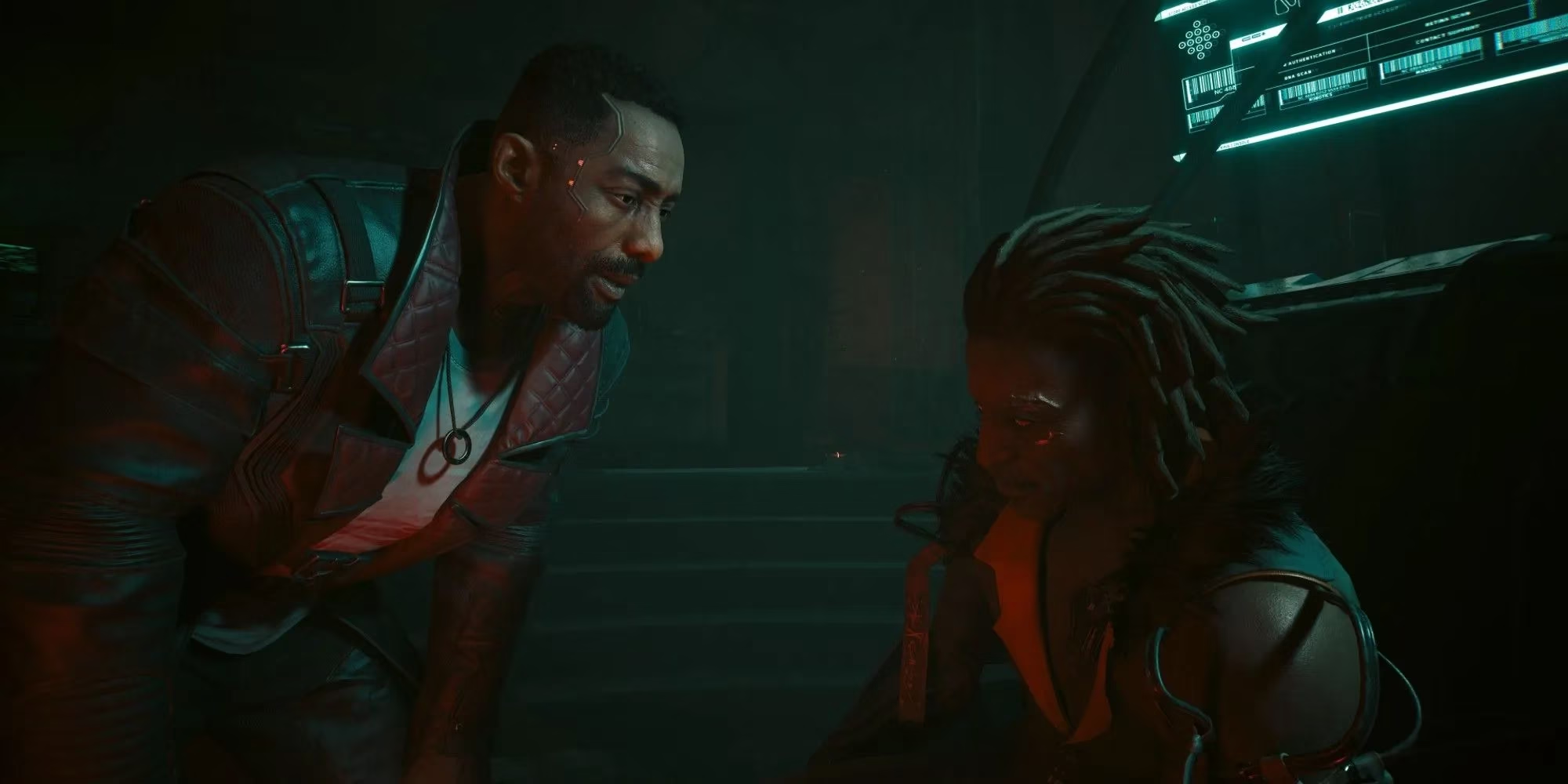
That is the tragedy and the appeal of Reed. He is not a hero in the traditional sense. He doesn’t crack jokes or charm his way out of danger. He simply endures, and he makes the people around him feel the weight of every year he has spent inside the machine. That is exactly the kind of Bond Elba might have delivered: not the polished spy the franchise had grown comfortable with, but a man whose service had hollowed him out without ever breaking his sense of mission.
So if you’re an Idris Elba fan and you happen to own Cyberpunk 2077, I’d encourage you to play Phantom Liberty and pay very close attention. Don’t just watch the plot beats. Listen to Elba’s line reads. Watch how Reed holds himself in a room. You might find yourself thinking about what could have been. For my money, it’s the closest we’ll ever get to seeing Idris Elba play James Bond — and it’s strangely satisfying, even as it arrives too late. 🎮🕵️
The following analysis references HowLongToBeat, a widely used database for estimating campaign and expansion playtime, which can help set expectations for how long you’ll be living with Phantom Liberty’s slower-burn spy pacing and Idris Elba’s restrained Solomon Reed performance. Checking typical completion ranges before you start can also clarify whether you’ll have enough time to fully absorb the DLC’s branching decisions, dialogue-heavy scenes, and late-game escalation that make Reed feel like the closest thing to an Elba-era Bond.