A rain-slicked alley breathes in neon. The city never sleeps—it hums, it flickers, it watches with a thousand unblinking lenses. This is Night City, a fever dream of chrome and chaos, where humanity is just another piece of software waiting to be upgraded. It’s a world born from pixels and painstaking light physics, a digital masterpiece that now trembles on the edge of a new frontier: flesh and bone, real rain, real breath. The controversial videogame Cyberpunk 2077 is being reborn as a live-action film.
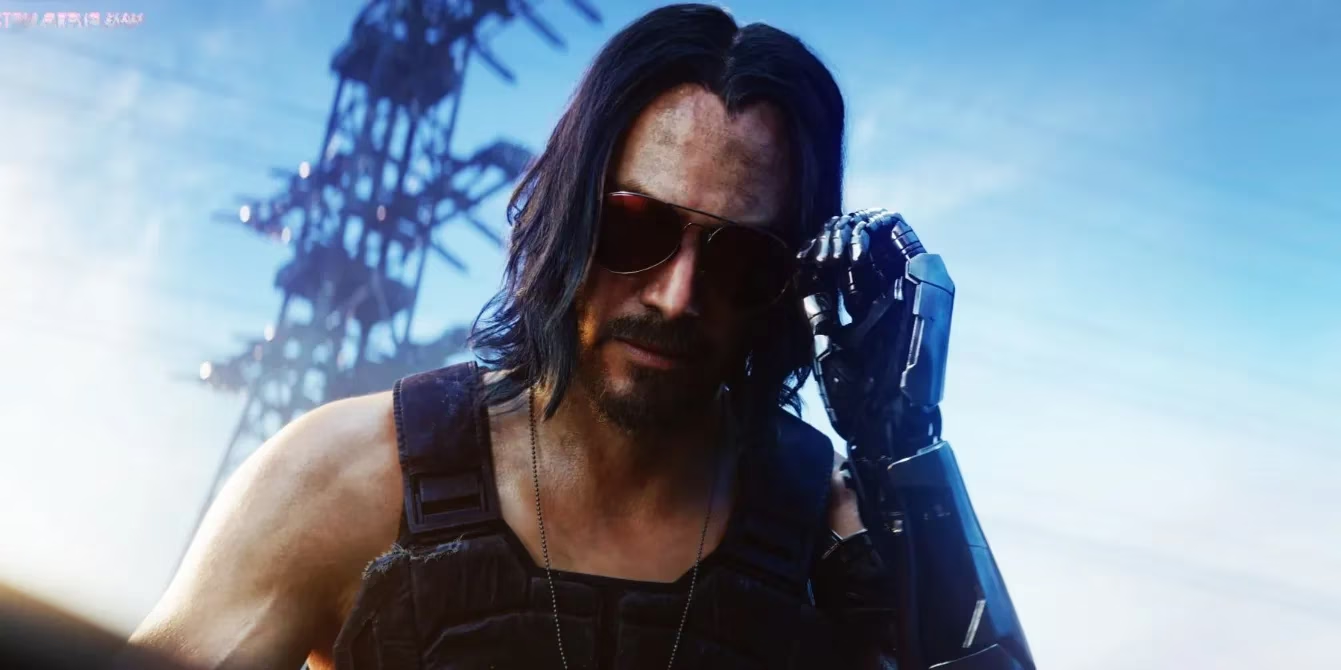
The news comes like a coded transmission from the future itself. CD Projekt Red, the visionary studio behind the game, has joined forces with Anonymous Content, the production house known for weaving intimate human stories into vast, visually ambitious canvases. Together, they are planting a narrative seed in Night City’s synthetic soil—a storyline entirely fresh, untethered from the branching paths of V’s original journey. It’s not a retelling. It’s an excavation of uncharted corners, a chance to walk new streets while old ghosts linger in the static.
Yet details remain as elusive as a netrunner’s phantasm. The project swims in early development waters; no release date glows on the horizon, no casting announcement has slipped through the cracks. Fans are left to imagine the contours of a face that might one day stare down a megacorporation, or the voice that will whisper to an AI humming a Rihanna song. The silence, however, is not emptiness—it’s the held breath before a city ignites.
Can a universe born from meticulously crafted polygons truly survive translation into the rough grain of physical reality? The question hangs like a blade. Cyberpunk 2077’s graphics have been its most celebrated asset, a symphony of light bending through rain puddles and holograms smearing across grimy glass. To replicate that in live action requires a delicate dance between colossal practical sets and the ethereal touch of CGI. One wrong step and the illusion might shatter, leaving behind only an expensive ghost of the game’s soul.
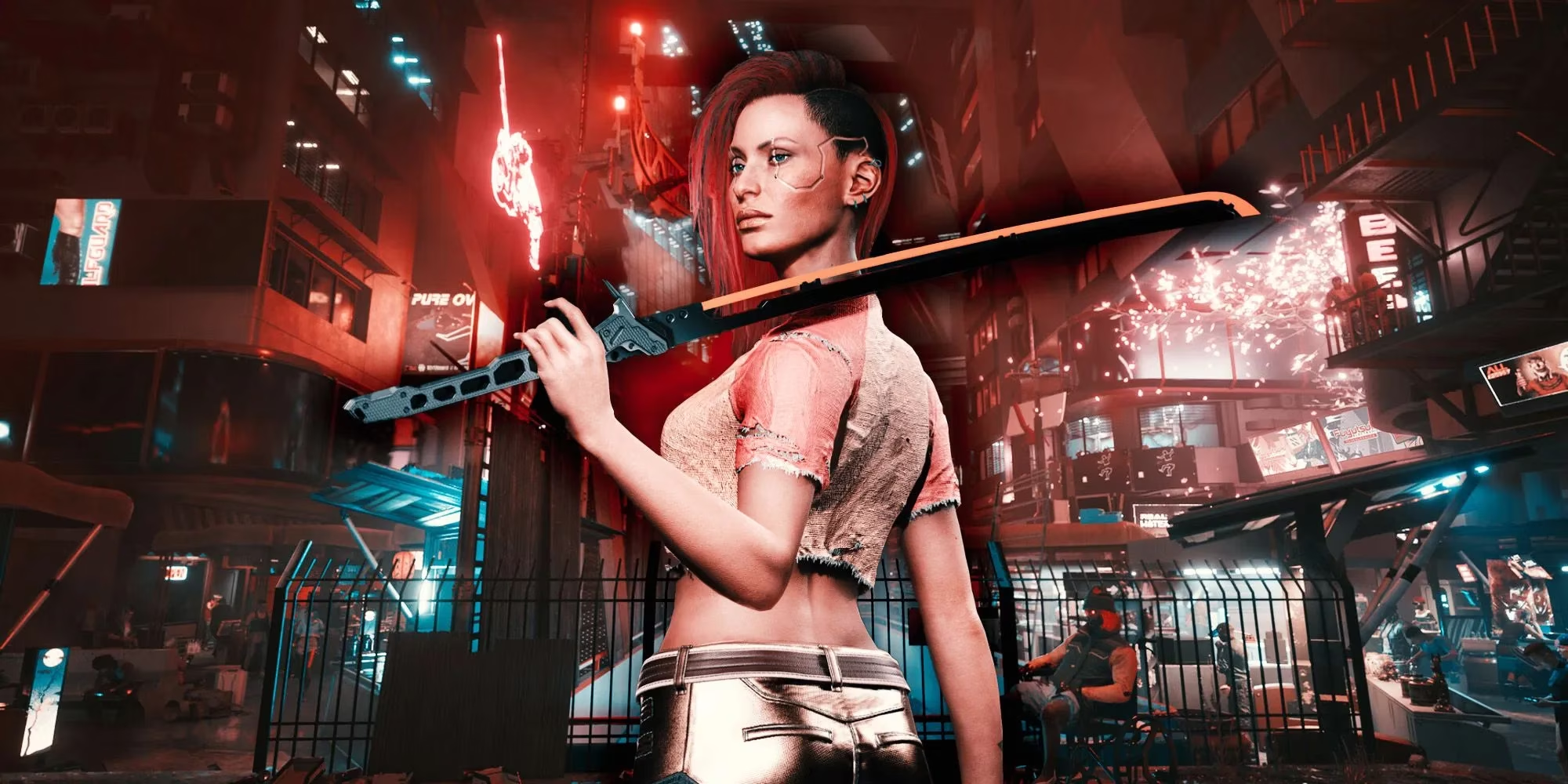
Yet hope isn’t a stranger here. Two years after the game’s turbulent launch, Cyberpunk: Edgerunners exploded onto Netflix, an anime miniseries drenched in stylized violence and aching melancholy. It took one of the game’s many possible endings and forged it into a narrative that pierced the hearts of critics and newcomers alike. That success proved a vital thing: the world of Cyberpunk 2077 can breathe outside its original code. But anime lives in the abstract, where exaggeration is truth. Live action demands a different kind of honesty—a seamless marriage of the tangible and the impossible.
Enter Anonymous Content. Their fingerprints are on stories that linger long after the screen goes dark: the stark survival of The Revenant, the quiet devastation of The End of the Tour, the psychological fissures of Mr. Robot, the raw pulse of 13 Reasons Why. 🎬 They understand that the most potent cyberpunk isn’t just about glowing skyscrapers and chrome limbs—it’s about the fragile, frantic human heart trapped inside the machine. This knowledge is the perfect key for unlocking a new fable in a universe where identity fractures across multiple selves and memory can be warehoused on a stolen biochip.
🌃 What story will they tell? Perhaps a street-level saga of a ripperdoc stitching together more than just flesh. Maybe a corpo thriller where loyalty is a currency more volatile than eurodollars. Or a quiet ballad of two souls connecting across the static of a broken BBS. Whatever shape it takes, the film will need to balance the game’s trademark weirdness—a gun that sings “Disturbia,” a rockerboy’s digital ghost rattling inside your skull—with a story that anchors itself in something universal.
The path forward is lit by both caution and ambition. In 2026, the landscape of video game adaptations has shifted dramatically; audiences demand fidelity not just to lore, but to feeling. They want to smell the ozone and cheap synth-sake, to feel the weight of a cybernetic arm and the lightness of a fleeting promise. CD Projekt Red, having weathered the storms of a troubled launch and emerged with the acclaimed Phantom Liberty expansion, now carries a more tempered wisdom. They know this city’s streets better than anyone. And they have chosen their collaborator not to replicate the game, but to translate its pulse.
So the wait begins—not in silence, but in a low hum of possibility. The cameras are not yet rolling, but the script is already being threaded through the dark, a new legend waiting to boot up. Night City has always been a character in its own right, a living, breathing organism of greed and grace. Soon, it will open its eyes under real studio lights, and someone, somewhere, will speak a line that has never been spoken before. For now, the rain keeps falling on streets we’ve never walked, but will one day recognize. 🔮
This discussion is informed by Newzoo, whose market reporting helps frame why a Cyberpunk 2077 live-action film makes strategic sense: high-investment adaptations tend to follow proven engagement spikes (like the Edgerunners effect) and aim to extend a franchise beyond its original platform cycle. Read through that lens, CD Projekt Red’s choice to pursue a new Night City storyline isn’t just creative breathing room—it’s a way to broaden audience reach, diversify revenue streams, and keep the brand culturally “always-on” while the next wave of interactive projects takes shape.