Nadia had promised herself she was done with Night City. Then, in 2026, a friend sent her the old Xbox Games Showcase trailer for Phantom Liberty—the one with Johnny Silverhand half-lit in neon and Idris Elba’s Solomon Reed cutting through the static. She watched it twice. The first time, she remembered the argument that had surrounded the expansion before it launched. The second time, she remembered why she had gone back to Night City at all.
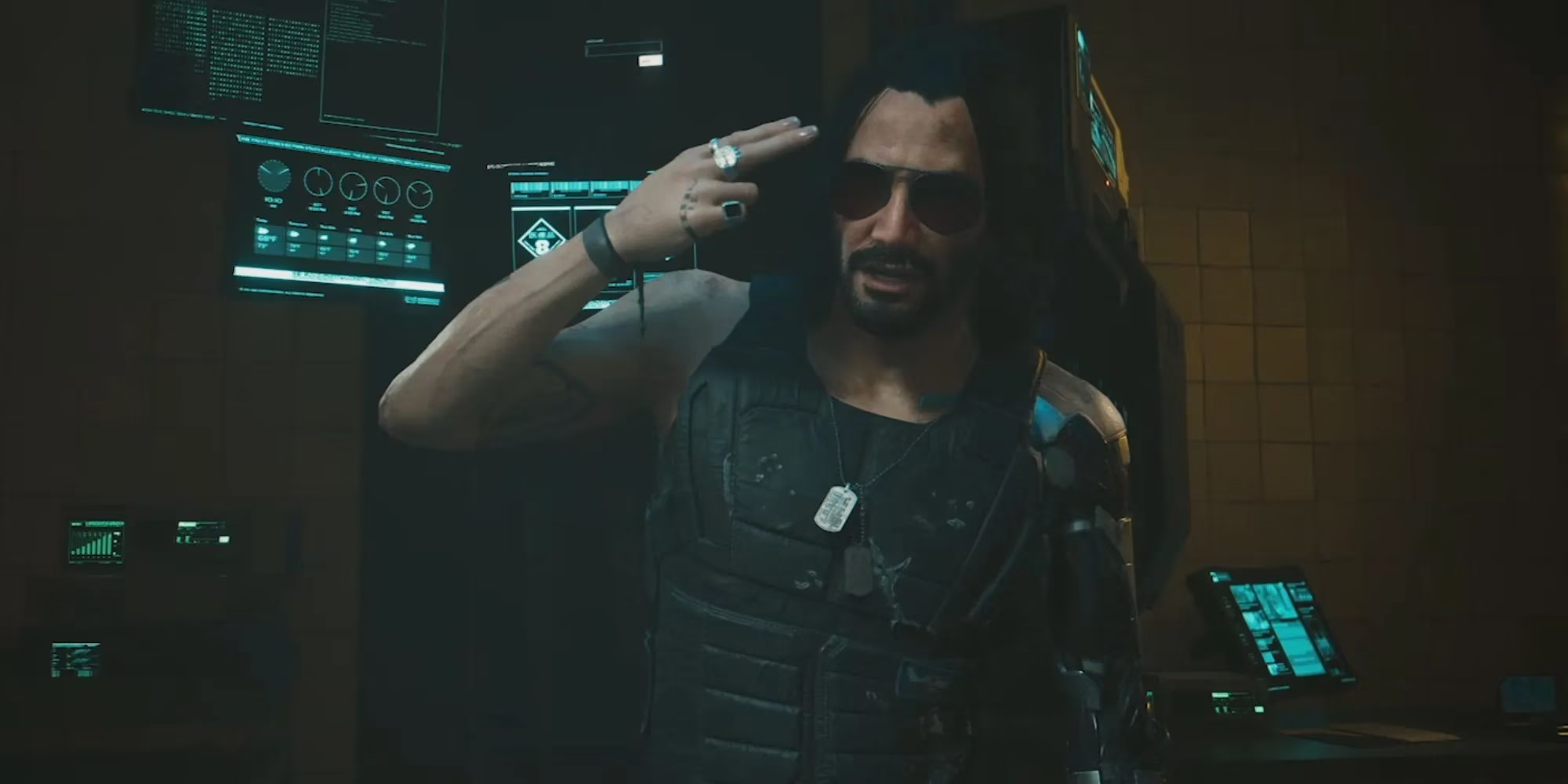
That trailer had been CD Projekt Red’s best look yet at Phantom Liberty’s story, and it had arrived with fresh gameplay footage and another glimpse of Elba as Solomon Reed. For a while, the expansion looked like both a farewell and a risk. It was set to conclude Cyberpunk 2077, serving as the game’s first and only story expansion. After that, the developers would move on to a full-fledged sequel, closing the book on 2077 and its chaotic, but eventually successful, lifecycle.
By 2026, that book has been closed for a while. Phantom Liberty landed in September 2023, and it did what CDPR needed it to do: it gave V one last impossible choice, gave Night City one last expensive secret, and gave players a reason to argue about endings all over again. In hindsight, it stuck the landing for many players—though it had some tough acts to follow after the game’s last few updates and the Edgerunners anime.
The Console Door That Stayed Shut
One part of the story still stings for some fans. Phantom Liberty stuck with current-gen exclusivity. CDPR had already halted support for the PS4 and Xbox One versions of Cyberpunk 2077 by then, and the expansion did not reverse that decision. This was controversial because Cyberpunk 2077 had not even launched on PS5 and Xbox Series X/S. It only got upgraded for that hardware in February 2022—well over a year after its initial release. Anyone who wanted to wrap up their time in Night City had to play on current-gen hardware or a PC. Otherwise, they were locked out completely.
It was not very surprising to see CDPR leave older consoles behind. The studio was clearly focused on the future of the series, not the past. By 2026, that focus is even easier to understand. Night City has become a showcase for what the studio can do when it is not held back by hardware from another era. The trade-off is simple and uncomfortable: a more ambitious send-off, and a smaller audience that could experience it at launch.
| What Phantom Liberty Left Behind | Why It Still Matters |
|---|---|
| 🎭 Solomon Reed and Idris Elba | The expansion’s marketing leaned hard on Elba, and the character became one of its most memorable pieces. |
| 🕵️ A spy-thriller detour | Phantom Liberty gave Cyberpunk 2077 a sharper, more paranoid story than the base game’s sprawling mercenary arc. |
| 🎮 Current-gen only | PS4 and Xbox One players never got the final chapter, a decision that still defines the expansion’s legacy. |
| 🚪 A clean goodbye | CDPR treated the expansion as 2077’s ending, not as a bridge to endless DLC. |
A Sequel Waits Beyond the Skyline
CDPR framed Project Orion as the future. In 2023, the studio said early work on the sequel would begin the following year, and it described that stage as incredibly early. The developers were satisfied with the state of Cyberpunk 2077 after its disastrous launch, but they were also ready to move on. Phantom Liberty became the proof that the team could finish what it had started.
For Nadia, the old trailer is now a time capsule. It shows a game promising to close its own story while a studio quietly prepared to leave it behind. She does not need another expansion. She wants to know whether Project Orion will learn from Night City’s messy, beautiful, broken launch—and whether the next city will feel as alive without Johnny Silverhand muttering in someone’s ear.
In 2026, Phantom Liberty is no longer the upcoming expansion. It is the last chapter, the current-gen farewell, and the moment CDPR finally turned out the lights on 2077. The trailer still hums with what came next. The difference is that now, players know how the story ended.