Cyberpunk 2077, that neon-soaked odyssey of Night City, has always been a tale told in two parts. The initial stumble in 2020—a launch fraught with bugs and unmet expectations—has been, over the years, painstakingly mended through patches and the expansive Phantom Liberty DLC. Yet, even as the game found its footing, certain shadows remained, stretching long across its chrome-plated streets. For many who wandered its dystopian avenues, the echoes of repetitive encounters whispered of untapped potential, especially when it came to facing the city's most formidable challenges. Now, all eyes turn toward the horizon, to the promise held within the enigmatic codename: Project Orion.
The Monotony of the Humanoid Gauntlet
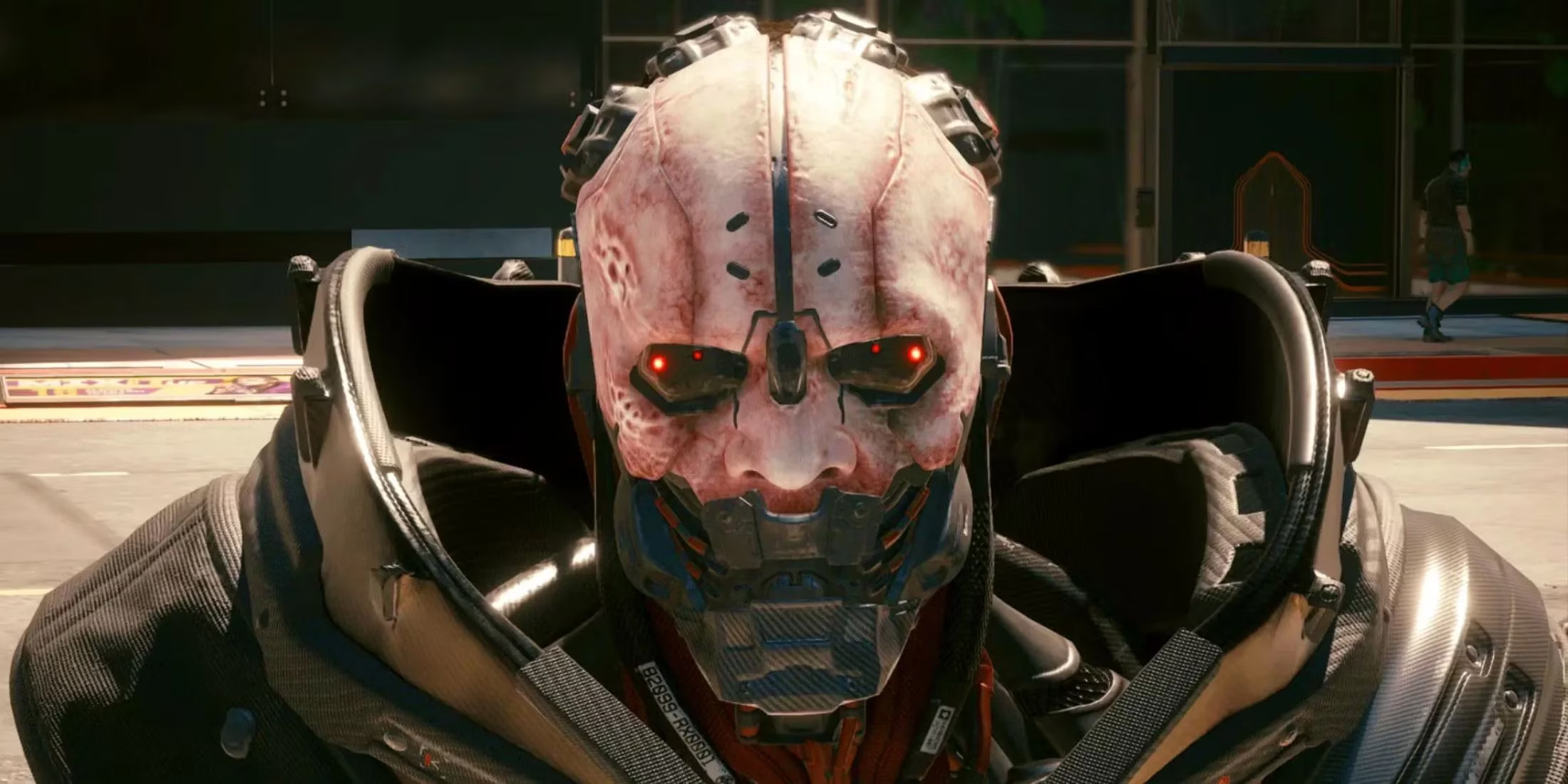
Boss fights in Cyberpunk 2077 were never the main event, no, but they were the punctuation marks in V's frantic story. From the earth-shaking clash with Adam Smasher to the street-level brawls of "Beat on the Brat," these encounters were meant to be crescendos. Yet, for all their narrative weight, they often fell into a familiar rhythm. The problem wasn't a lack of challenge, but a striking sameness in silhouette and strategy. Virtually every major adversary, from cyberpsychos to corporate enforcers, shared a fundamental blueprint: the humanoid form. This created a world where, mechanically speaking, a fight was a fight was a fight. Whether you were dodging bullets from a ganger or a legendary solo, the dance steps felt eerily similar.
It's a world away from the bestiary nightmares of CD Projekt Red's other beloved saga, The Witcher. There, Geralt faced a stunning variety:
-
Spectral Horrors: Wraiths and noonwraiths demanding specific oils and signs.
-
Bestial Terrors: Griffins, leshens, and werewolves, each with unique attack patterns and vulnerabilities.
-
Humanoid Foes: Bandits and mages, yes, but they were just one color in a much broader palette.
This variety wasn't just for show; it fundamentally shaped preparation and combat. Fighting a ghost was a different kind of problem-solving than outsmarting a cursed bear. In Night City, however, the toolbox often felt the same, a one-size-fits-all approach to violence. It got the job done, but it left you wondering... is this all there is?
Painting a New Bestiary for the Future
So, what could Project Orion do to break the mold? If the missing ingredients are visual spectacle and mechanical depth, then the recipe seems clear: weave a wider, weirder web of adversaries. The lore of Cyberpunk is a goldmine for this, just begging to be fully excavated. Imagine, if you will:
-
Cyberpsychos Reborn: Not just people with too much chrome, but entities whose humanity has been utterly subsumed. One might be a twitching, multi-limbed spider-mech, clattering across ceilings. Another could be a shimmering data-ghost, a glitch in reality itself, requiring netrunner skills to materialize and engage. Talk about a bad day at the office!
-
The Rise of the Automatons: Corporations wouldn't just stop at human security. Fully autonomous combat drones, from sleek hunter-killer spheres to hulking, construction-mech-turned-war-machine, could create dynamic, environmental hazards. Picture a boss that isn't a single entity, but a swarm of intelligent micro-drones, forcing you to change your tactics completely.
-
Biotechnica's Nightmares: The animal-cyborg hybrid from the 2077 teaser? That's just the start. What about fully engineered combat beasts, or unstable prototypical "braindance titans" that warp the perception of the battlefield around them?
This shift wouldn't just be about looks; it would force a revolution in player builds and playstyles. A netrunner build that dominates human opponents might be nearly useless against a hardened automaton, suddenly making Tech ability and projectile weapons essential. A solo built for brute force might struggle to pin down a spectral enemy, requiring quick investment in intelligence or reflex skills. It makes every build decision matter in a more profound way.
The Delicate Dance of Freedom and Design
Now, this is where it gets tricky, right? CD Projekt Red can't just throw a bunch of crazy monsters into the game and call it a day. The core promise of Cyberpunk is player agency—the freedom to be a stealthy ghost, a talking diplomat, or a walking armory. Boss design must honor that. The goal isn't to create a brick wall that only one specific build can overcome, but a complex puzzle with multiple solutions.
Thankfully, the genre is full of masters who have done just this. Games have shown us that you can have a gigantic, screen-filling monster that can be defeated by hacking its systems, exploiting environmental weaknesses, using brute force, or a combination of all three. The key for Project Orion will be to ensure that for every new, terrifying form it introduces, there are multiple paths to victory. Maybe that mech can be short-circuited, or its pilot compartment hacked. Perhaps that data-ghost requires a specific frequency of sonic damage to stabilize. The possibilities are endless, and they're what will separate a good sequel from a legendary one.
As we look toward 2026 and beyond, the potential of Project Orion hangs in the air like the neon haze of a Night City rain. The foundation is there—a world rich with lore, a developer with a proven capacity for growth, and a community hungry for a deeper, more varied experience. By embracing a truly diverse bestiary of challenges, CD Projekt Red has the chance to do more than fix past mistakes. They can redefine what a confrontation means in a cyberpunk world, turning every boss fight from a simple test of strength into a unique story all its own. The city is listening, and it's waiting for a new kind of fight.