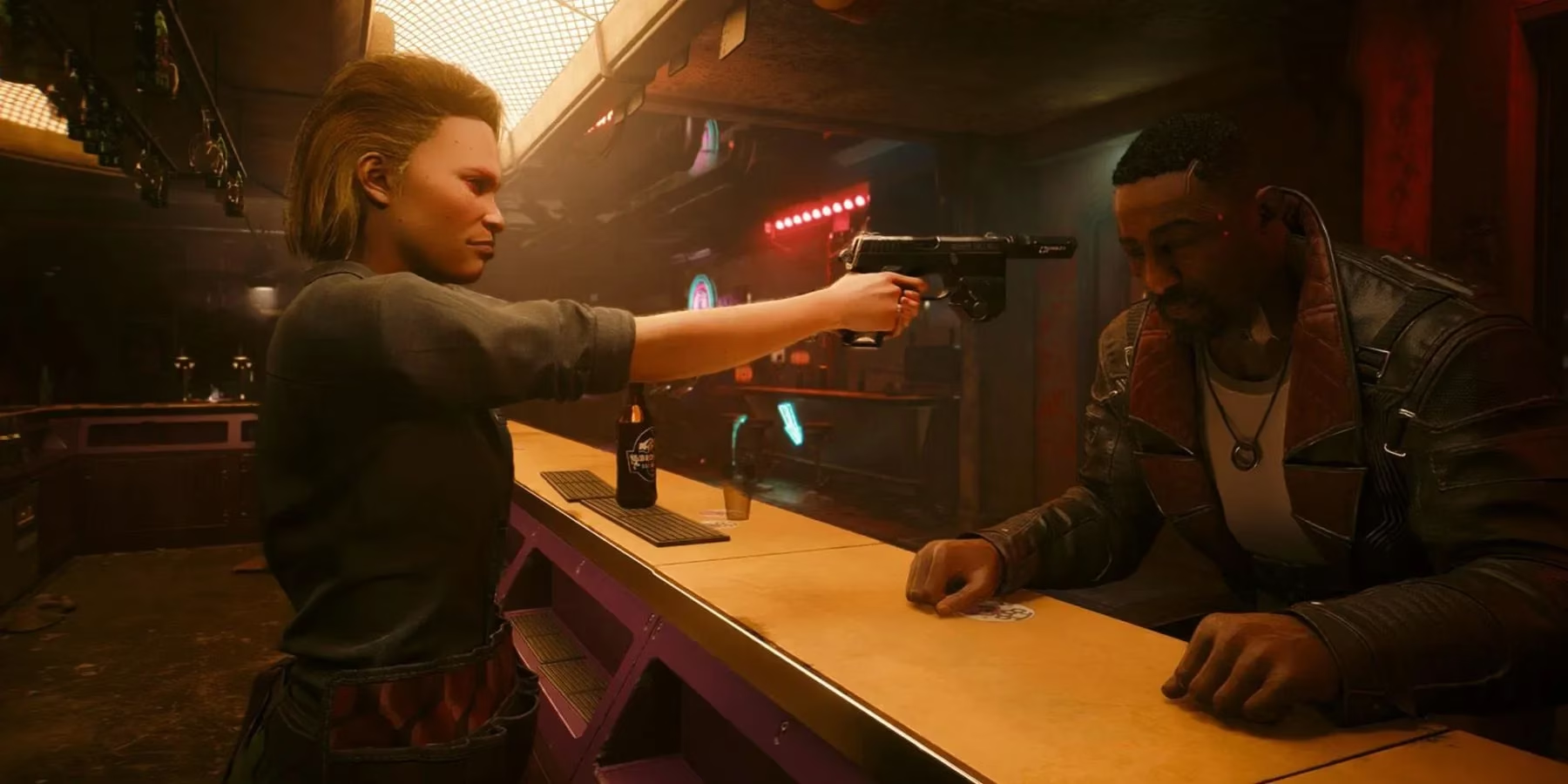
I’ll be honest: when I first launched Cyberpunk 2077, I was ready to shape every conversation to my liking. It’s an RPG, after all—my V, my rules. But boy, was I wrong. I quickly learned that the dialogue prompts staring back at me from the screen were as trustworthy as a back-alley fixer with a nervous twitch. Those neat little text snippets promised one thing, yet V’s voice actor delivered something completely different. It felt like playing a game of telephone with myself—and losing.
Let me paint a picture. There I am, deep in a tense negotiation with a gang leader. The prompt reads something casual, almost diplomatic. I select it, expecting V to smooth things over. Instead, my character practically growls a threat that makes the room go silent and the guns come out. Talk about a rude awakening. I didn’t choose violence—the dialogue option chose it for me. This disconnect between what I thought I was saying and what V actually said became a running joke in my playthrough, but it also chipped away at my immersion.
Now, I’m not the only one who’s been burned by this. Back in 2015, Fallout 4 pulled the same stunt, and it drove players up the wall. Bethesda gave us a voiced protagonist for the first time, but the dialogue wheel was a disaster: a single word like “Sarcastic” would trigger a line nobody could have predicted. Compared to that, Cyberpunk 2077’s prompts are a bit more generous, yet the sting is just as real. I remember picking a “Nice” option during a side mission, only for V to spit venom at an innocent bystander. It was like the game slapped me on the wrist for trying to be kind.
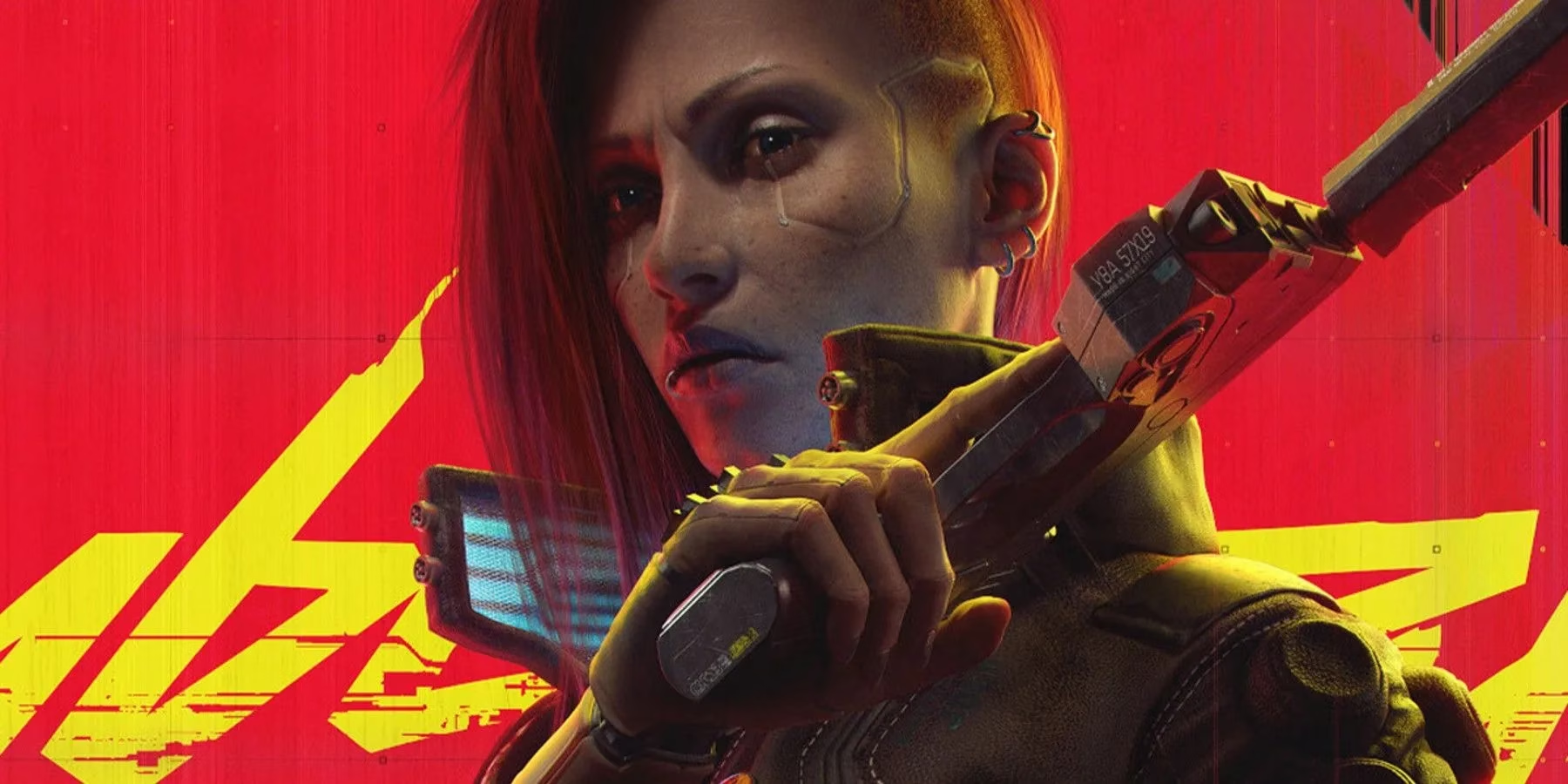
Phantom Liberty magnified this issue, strangely enough. The expansion tripled the number of high-stakes choices, and with more power came more opportunities for my dialogue expectations to be shattered. I’d choose a prompt that hinted at cautious optimism, and V would launch into a manic monologue that had me scrambling for the skip button. Don’t get me wrong—I love the writing and Keanu Reeves’ presence, but V’s lines sometimes felt like they came from a parallel universe where my prompt meant the exact opposite thing. I swear, there were moments where I had to pause and ask my monitor, “Did I click that?”
Why does this happen? The logical part of me gets it. CD Projekt Red recorded thousands of lines with the voice actors, and condensing those into a few words of prompt text is a tightrope walk. Sometimes the actor adds an improvisation, or the studio tweaks the tone after the script was locked. Adding the full voice line to the selection screen would clutter the UI faster than a braindance overload. But the emotional part of me still groans every time V goes off-script. Those little surprises, while occasionally funny, can knock a carefully crafted narrative off its rails.
As I sit here in 2026, with Phantom Liberty firmly in the rearview mirror and whispers of a Cyberpunk sequel on the horizon, I can’t help but hope. CD Projekt Red has a chance to refine this system—to make dialogue choices that actually reflect what we’re about to say. Maybe they’ll give us a more detailed preview, or even let us rewind a line if V’s interpretation feels too jarring. Until then, I’ll keep a pillow handy to scream into whenever my peaceful V suddenly declares war. Because in Night City, the real enemy isn’t Arasaka—it’s the dialogue wheel.
Cyberpunk 2077 remains a masterpiece of atmosphere and choice, but those choices lose their magic when you can’t trust them. Here’s hoping the next iteration lets us actually mean what we say.