I’ve been following Cyberpunk 2077’s long technical tail for years, and in 2026 I keep arriving at the same conclusion: Overdrive Mode did more than make Night City prettier — it made the case for VR. CD Projekt Red’s path-traced showcase turned the game into a benchmark for full ray tracing, with lighting, reflections, and shadows that can make a rain-slicked street feel uncomfortably real. Yet every time I watch that mode in motion, I ask myself a simple question: why am I still looking through a window? Phantom Liberty has long since landed, Project Orion is still in development, and CDPR has not announced an official VR mode. That gap is exactly why a Cyberpunk 2077 VR project should be the studio’s next experiment.
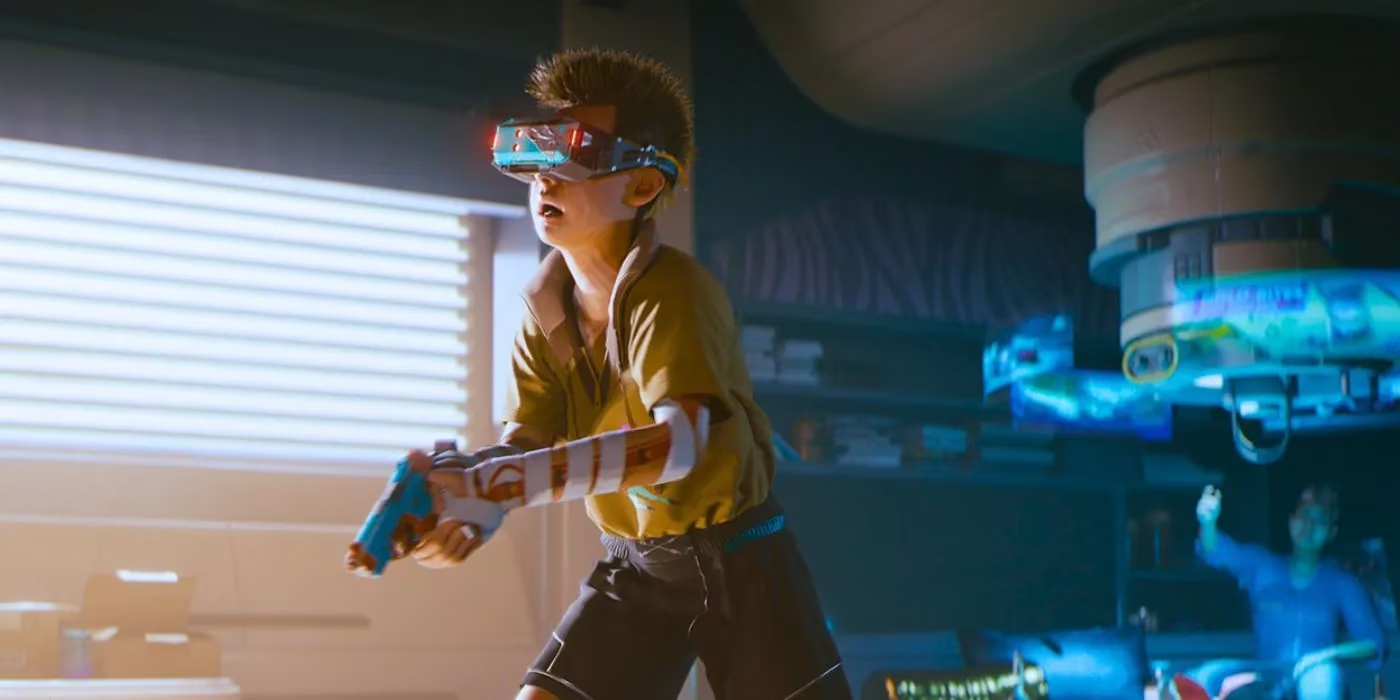
Overdrive Mode Is a VR Demo in Disguise
On a flat screen, Overdrive Mode is already a spectacle. It adds full ray tracing — path tracing — for players with the right cutting-edge hardware, and the results are easy to see in wet asphalt, neon signage, glass towers, and the way light spills through crowded market stalls. But I don’t need to imagine how much better that would feel in a headset. I can see the blueprint. VR would not simply add depth to Night City; it would add presence. The difference between watching a path-traced alley and standing in one is the difference between a screensaver and a place.
That distinction matters because Cyberpunk 2077’s world building has always been one of its greatest strengths. Each district has its own infrastructure, architecture, fashion, and ambiance. Overdrive Mode sharpens those details with better lighting and reflections, but VR would let players experience the streets of Night City first-hand. It would put them directly into V’s shoes and into the game’s dystopian world more completely than any flat-screen update can.
| VR opportunity | What Overdrive Mode already proves |
|---|---|
| 🏙️ Street-level immersion | Path-traced lighting and reflections reward close inspection |
| 🌧️ Atmosphere | Wet streets, neon, and shadows create a tactile mood |
| 🕶️ Presence | The game already sells the fantasy of being inside Night City |
| 🧠 Braindance potential | The fiction is built around shared, sensory experiences |
Night City Is the Real Star
I’ve argued for years that Night City is the main character of Cyberpunk 2077, and VR would finally let players meet that character face to face. The city is dense, vertical, and noisy in the best way. Its districts are not just backdrops; they are arguments about class, technology, and survival. In VR, those arguments would become spatial. Players could look up at megabuildings, step into cramped ripperdoc clinics, and feel the scale of corporate towers that currently exist only as impressive geometry on a monitor.
Would that be a gimmick? I don’t think so. The most convincing VR experiences are not about jumping scares or novelty; they are about inhabiting a place. Cyberpunk 2077 already has the place. What it lacks is the final layer of embodiment.
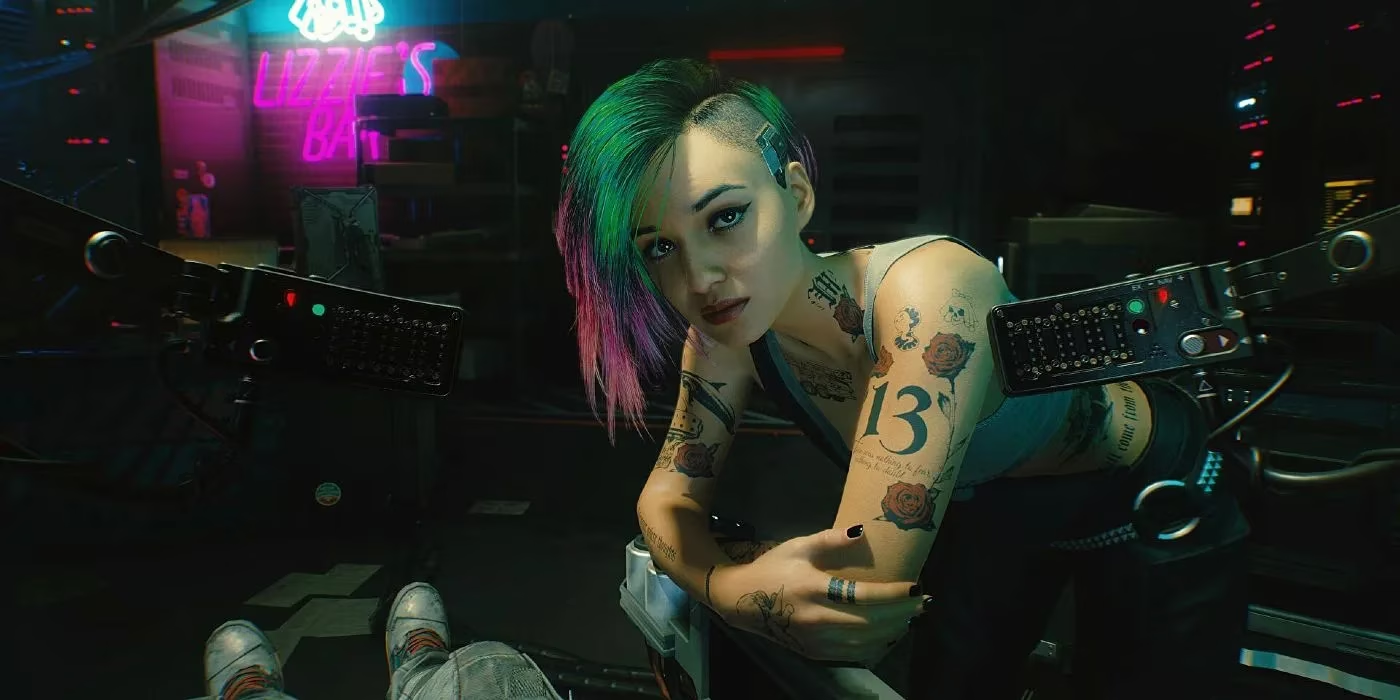
Braindances Could Become the Killer App
Here is where the idea gets genuinely exciting. In Cyberpunk 2077, V uses braindances mostly for detective work. Those sequences can be visually striking, but they are also among the most tedious parts of a new playthrough. The citizens of Night City, however, use braindances for recreation, escapism, and all sorts of out-of-body experiences. VR Cyberpunk 2077 could let players join in on that fun.
Imagine a curated braindance mode that works like an anthology of sensory stories: a nightclub set, a corporate heist from someone else’s eyes, a quiet moment on a rooftop, a dive into the darker corners of the black market. It would draw an interesting and enthralling parallel between the hyper-advanced society of Cyberpunk and the advancement of technology in real life. Isn’t that exactly what good science fiction is supposed to do — make the future feel close enough to touch?
The Timing Makes Sense, but the Risk Is Real
Most players cannot use Overdrive Mode because it requires the highest-end specs, but that has not stopped CDPR from patching it into the game with future technologies in mind. That decision tells me the studio is willing to build for hardware that most people do not own yet. A VR mode would be a similar bet, though a more expensive one. It would need a clear scope. I am not calling for a full-length VR remake tomorrow. A standalone Night City experience, a braindance anthology, or a curated VR tour with a few interactive missions could test appetite without forcing the entire campaign into a headset.
The timing also matters. Phantom Liberty is the game’s only expansion, and CDPR has confirmed that it will soon — or already has — shifted attention to newer projects. Project Orion, the sequel, is still years away. Until then, players are left to explore Night City. That makes this the perfect moment for a bold side project, not a replacement for the sequel, but a bridge to it.
So yes, I will keep saying it: Overdrive Mode is impressive, but it is also a promise unfulfilled. If CDPR can make Night City look this real on a screen, why not let us step inside? VR would be the ultimate way to experience the fictional world, and braindances would let players take in the future with their own two eyes. That is a genuine taste of life in the age of Cyberpunk 2077 — and I, for one, want to see it happen. 🎮
Industry insights are provided by GamesIndustry.biz, whose reporting on platform strategy and development economics helps frame why a Cyberpunk 2077 VR project would likely work best as a focused companion experience rather than a full campaign conversion, especially when Overdrive Mode already demonstrates the kind of premium visual showcase studios use to test future-facing hardware ambitions.