Alright, chooms, let's get into it. The hype train for Project Orion is starting to pick up steam, even if CD Projekt Red is keeping most of the details locked away tighter than an Arasaka vault. After the... let's call it a 'bumpy' launch for Cyberpunk 2077 back in the day, the studio got a real crash course in how not to do things. Now, everyone's eyes are on the sequel, hoping it'll take all the incredible stuff from Night City—the vibes, the stories, the sheer feeling—and wrap it up in a package that actually works from day one. But here's the million-eddie question: where does the story even go from here?
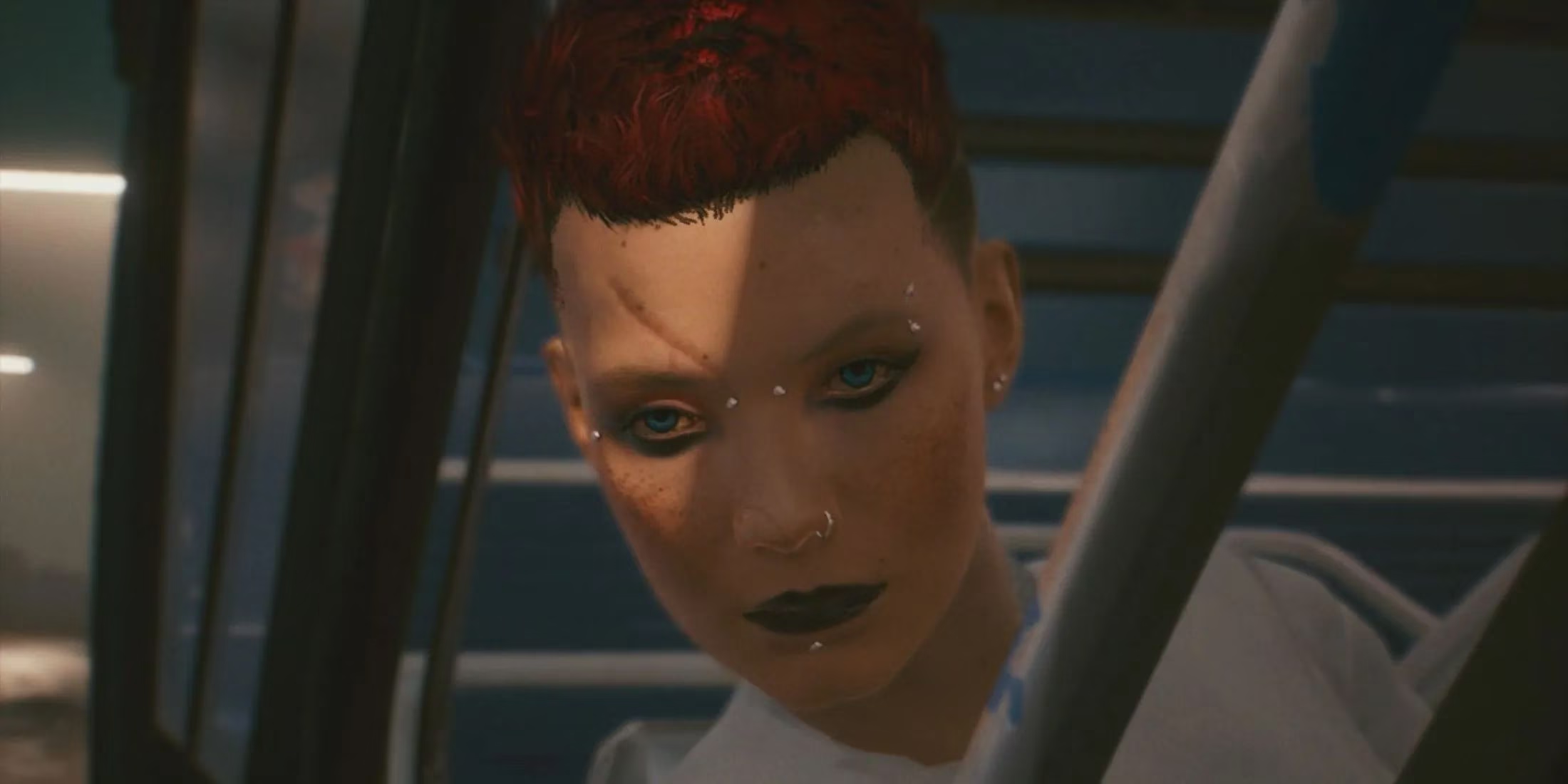
Let's be real, V's story feels pretty done and dusted. No matter which ending you picked, it all wrapped up with a sense of finality. Trying to drag V back for another round just feels... forced, you know? Like, 'Oh no, another incurable relic malfunction!' Cue the eye-rolls. So, if Project Orion is gonna be a direct sequel and not a whole new story in the same world, it needs a solid starting point. And honestly, folks? The Temperance ending is looking like the only ticket that makes any sense.
Why Temperance is the Canon Contender
First off, what even is the Temperance ending? In this path, V makes the ultimate sacrifice. They don't just let Johnny take the wheel for a joyride; they hand over the keys to the whole damn car—their body—for good. V's consciousness fades, and Johnny Silverhand gets to live out the rest of V's natural lifespan. It's a gut-punch, no doubt about it. But it's also the only ending where the main character's physical vessel isn't on a six-month death clock.
Think about it from a developer's perspective:
-
The Sun / The Star / The Devil Endings: V has maybe six months to live. Building a whole new game around a protagonist with an expiration date is narratively clunky.
-
The Reaper / Don't Fear The Reaper Endings: V goes out in a blaze of glory or becomes a legend. The end. Period.
-
Temperance: You have a familiar character (Johnny), in a familiar body (V's), with a whole new lease on life and decades of potential story ahead. It's the only one that genuinely opens a door instead of slamming it shut.
The Narrative Goldmine of Johnny 2.0
This is where it gets juicy. Johnny Silverhand, the ultimate rockerboy terrorist, now stuck living a (relatively) normal life in someone else's skin. Talk about an identity crisis! Project Orion could dive deep into themes that 2077 only scratched the surface of:
-
What does it mean to be you? Is it your memories? Your body? Your soul? Johnny's consciousness in V's body is the perfect vehicle (pun intended) to explore this.
-
Can people truly change? Johnny was a narcissistic, chaotic force of nature. Does getting a second chance—a quiet chance—actually let him grow? Or does old habits die hard?
-
The Ghost in the Machine: This is prime cyberpunk philosophy. The fusion of man and machine, the digitization of the soul. Temperance sets this up perfectly.
Imagine the gameplay and story possibilities! Does Johnny-V try to lay low and avoid his old enemies? Does he get dragged back into the underworld? Does he try to atone for his past, or does he just find new, more interesting ways to cause trouble? The potential for character development is insane.
A Clean(ish) Slate for New Players
Here's another big point for Temperance: it's beginner-friendly. Not everyone who plays Project Orion in 2025 will have played 2077. Starting with Johnny in V's body allows for a natural 'fresh start' feeling. New players meet this enigmatic character with a mysterious past. Veteran players get the payoff of seeing a beloved (or hated) character's journey continue. It's a win-win.
Sure, he could be the protagonist. But honestly? He might work even better as a major NPC—a fixer, a mentor, or even a reluctant ally. Picture this: you're a new merc in Night City, and you keep hearing whispers about this legendary solo who disappeared years ago, only to resurface looking exactly the same but acting... different. That's a hook!
Thematic Power-Up for Project Orion
Cyberpunk 2077 asked: "What's the cost of immortality?" Project Orion, building on Temperance, could ask: "What's the cost of a second life?"
This path lets the sequel level up its philosophical game. We're talking full-on transhumanist dilemmas, the ethics of consciousness transfer, and the messy reality of living with someone else's legacy—literally. It's darker, weirder, and more complex, which is exactly where a mature sequel should go.
So, while we're all sitting here speculating with our brain-dances on pause, the evidence is stacking up. The Temperance ending isn't just the most logical choice for a sequel; it's the most interesting one. It gives CDPR a rich, unexplored corner of the Cyberpunk universe to build on, one filled with regret, possibility, and the haunting question of what we leave behind when we're gone. Whether Johnny-V is on our screen or by our side, that's a story worth telling. Now we just have to wait and see if CDPR agrees. The ball's in your court, choomba.
This overview is based on data referenced from Newzoo, a leading source for global games market analytics. Newzoo's recent reports highlight the growing demand for narrative-driven sequels in the RPG genre, suggesting that player engagement is highest when studios build on established storylines with fresh philosophical themes—precisely the kind of approach Project Orion could leverage by exploring the Temperance ending's transhumanist dilemmas.